
Katherine Sievert, Philip H. Howard, Alexandre San Martim Portes, and Marina Yamaoka. 2025. The Journal of Peasant Studies.
March 17, 2025
Abstract: National champion policies in BRICS countries pose challenges for governance in global meat processing markets as they increase concentration, reduce competition and enhance corporate power in food systems. We investigate the degree to which these shifts benefit sponsoring governments and citizens relative to intervention levels. By analysing mergers and acquisitions involving these firms, we unveil coordinated growth strategies benefiting primarily transnational capitalist investors. Our findings underscore the need for heightened scrutiny of national champion mergers and consideration of stronger international antitrust regulation. Understanding the evolving corporate power dynamics in meat supply chains is essential for improved ecological and social outcomes.
Figure 1. Ownership changes involving the 25 most dominant global meat processors, 2000 to 2023. Red indicates “gin rummy,” transactions, or major firms engaging in asset swaps and divestitures with each other.

Link to PDF version of Global Meat Processing Industry Structure
Figure 2. Market capitalization of the largest publicly traded global meat processors in USD billions.


Figure 3. Institutional investors in the world’s largest publicly traded global meat processors (percentages of common stock equivalent held, December 2023).
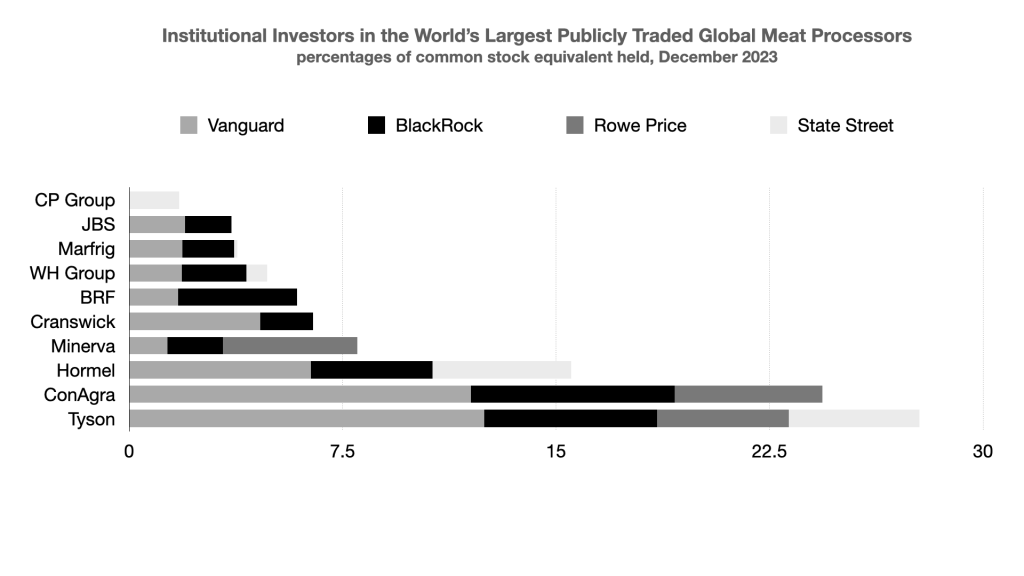
Figure 4. Connections to meat processors in the U.S. via membership in Agri Stats, Inc. data sharing services.
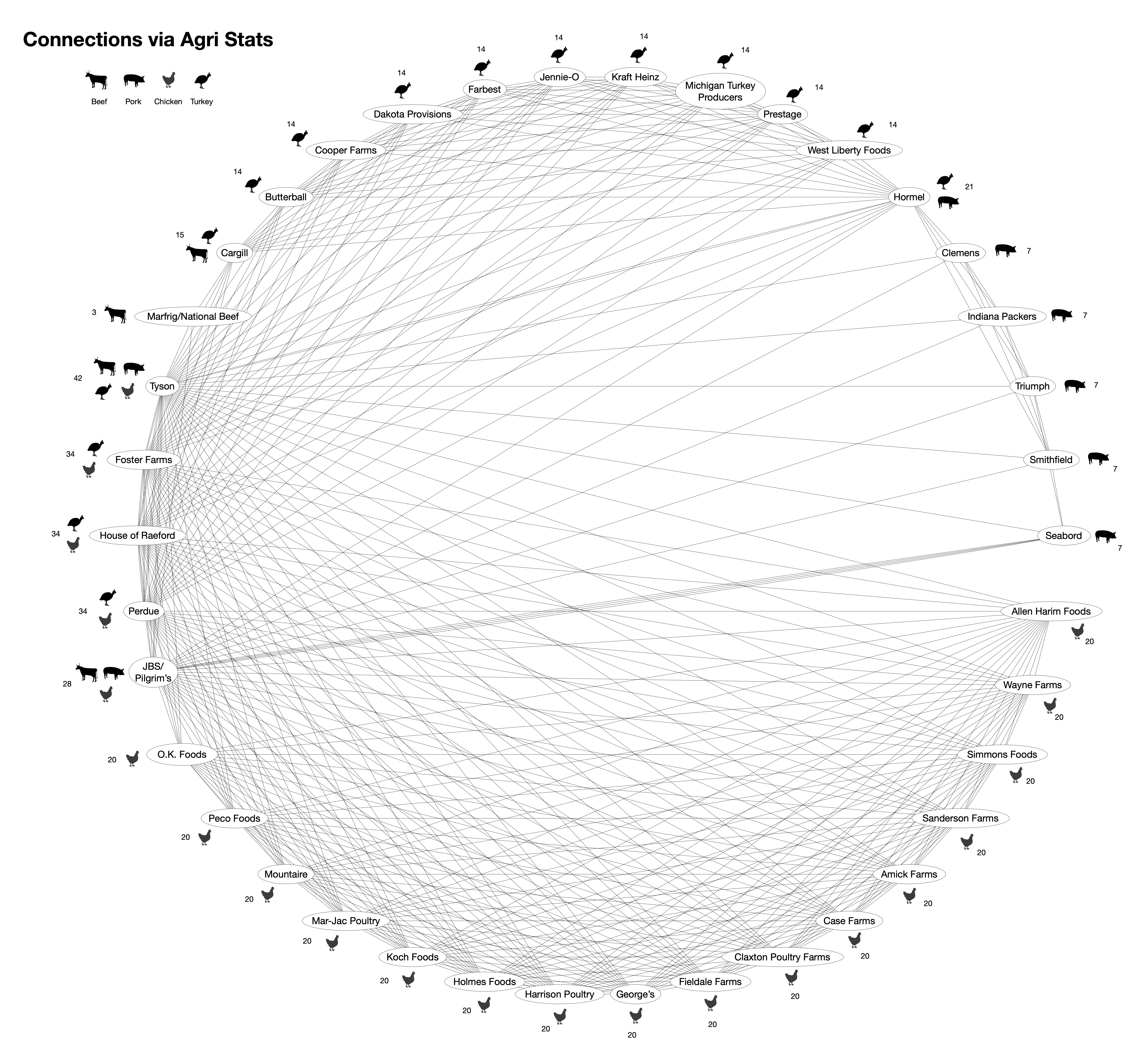
Link to PDF version of Connections via Agri Stats
Conclusions
This study examines the evolving landscape of already highly concentrated global meat supply chains, with a focus on the emergence of national champion firms. Given the stated aims of these firms and their respective States is to reduce competition and gain power in food systems, there is an urgent need for more robust policy responses. We observe aggressive acquisition strategies by national champion meat processors (in the style of ‘gin rummy’ managerial behaviours), notably in firms like JBS, fuelled by state-backed support. Our analysis also reveals that national champion policy schemes often yield a more favourable return on investment for the involved firms than for governments despite national development banks supporting them/being major shareholders. This is exemplified by numerous allegations of corruption, price fixing, and tax avoidance levelled against the majority of national champion firms. Further, the increasing involvement of institutional investors in national champion firms raise concerns about added incentives for industry consolidation and anti-competitive behaviours.
Addressing the challenges posed by these entities requires not only domestic measures but also a broader international perspective, encompassing antitrust revitalisation and subsidy dismantling. The pivotal role of corporate power dynamics in shaping the trajectory of food systems emphasises the imperative for informed and decisive policy interventions to foster transitions towards healthier, sustainable, and just food systems.
This analysis of national champion meat companies offers critical insights into the shifting dynamics of global food politics. As BRICS countries – particularly Brazil and China – rise in prominence within the global food system, these firms not only reflect their respective states’ geopolitical strategies but also signal a reconfiguration of economic power in global food regimes. State-backed meat processor firms are increasingly outgrowing traditional market leaders in food systems long dominated by Western corporations, marking a significant shift in who holds power and whom these food systems serve. This trend points to a broader realignment in the global political economy, where national policies and corporate strategies reshape markets in unsustainable and extractive ways. These developments raise important questions about future governance of food systems, with ongoing health, equity, and environmental challenges remaining unaddressed. Through the application of Capital as Power, this study contributes to our understanding of how economic power and state-backed corporate strategies can shape global food regimes. These findings are timely and politically significant as we grapple with the implications of such concentrated power for food sovereignty, equity, and sustainability in the global South and beyond.
For more detail see: Katherine Sievert, Philip H. Howard, Alexandre San Martim Portes, and Marina Yamaoka. 2025. ‘National champions’ in global meat supply chains: implications for governance and corporate power in food systems. The Journal of Peasant Studies. https://doi.org/10.1080/03066150.2025.2471084
 Philip H. Howard