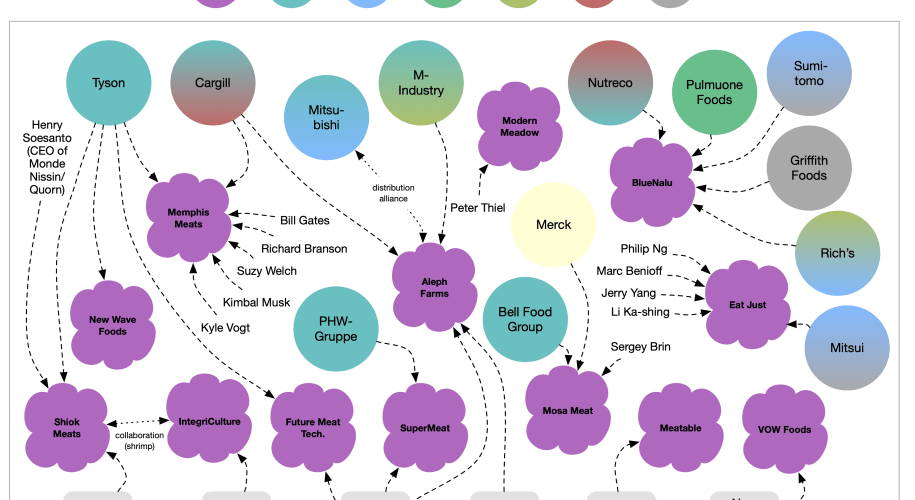

The Food System: Concentration and Its Impacts
A special report to the Family Farm Action Alliance, November 19, 2020. Click on images above for PDF versions Report Highlights Consolidation is happening across all sectors in the food system, at the national and global levels, and has resulted in a particular set of power relationships. This has resulted in numerous negative impacts on farmers, workers and their communities as well as consumers, who … Continue reading The Food System: Concentration and Its Impacts

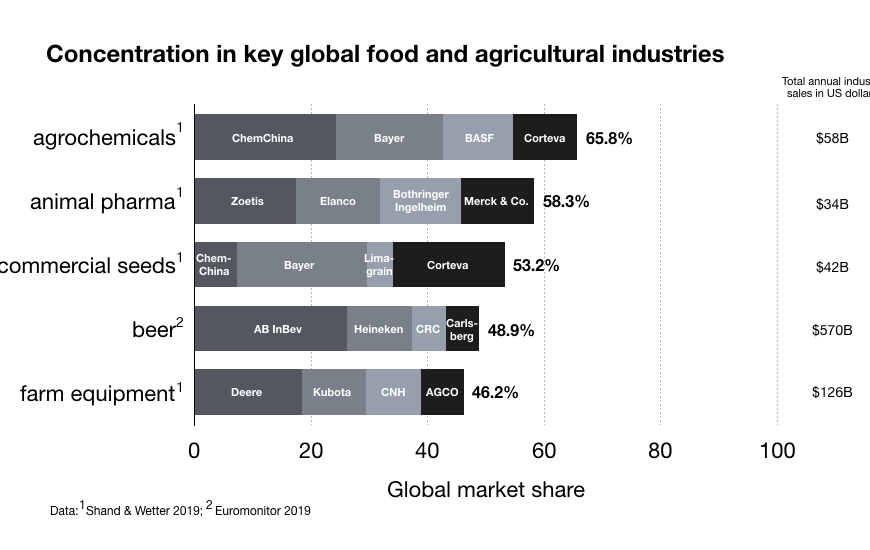
The State of Concentration in Global Food and Agriculture Industries
More than a decade has passed since the world was awoken by the publication of the International Assessment of Agricultural Knowledge, Science and Technology for Development (IAASTD) report. Now, a new book takes stock of what has been achieved since the release of that ground-breaking “Agriculture at a Crossroads” report. Continue reading The State of Concentration in Global Food and Agriculture Industries
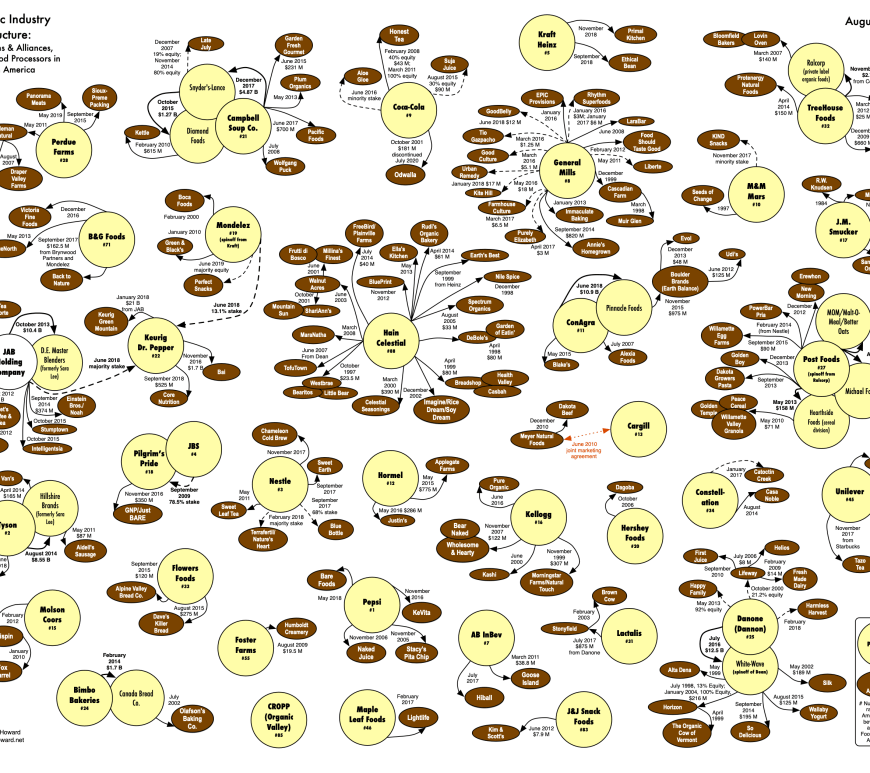
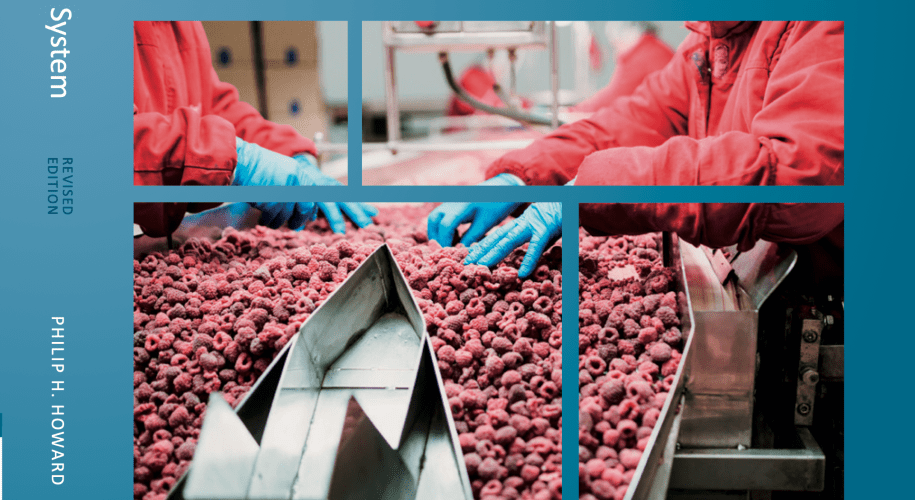
Organic Processing Industry Structure 2020
I put together the first version of this graphic in 2003, approximately a year after the USDAs national organic standard was phased in. This national standard helped to catalyze scores of acquisitions of pioneering organic brands by larger food processors and venture capitalists. These trends have only intensified. Continue reading Organic Processing Industry Structure 2020
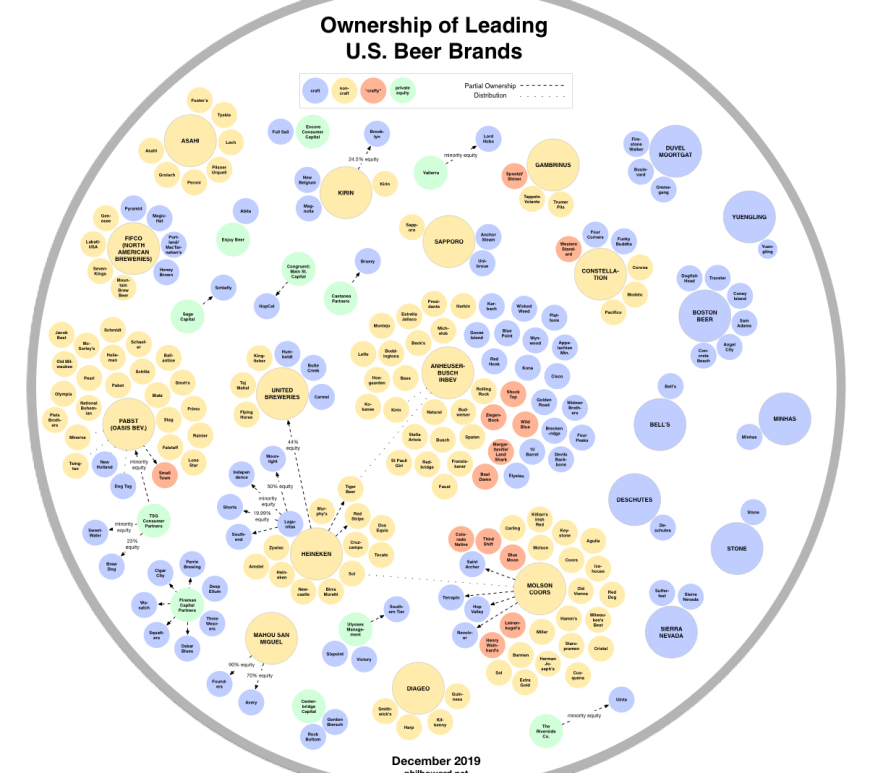
Recent Changes in the U.S. Beer Industry
This graphic shows the current ownership relations among U.S. beer brands as of December 2019. Since the previous version of this graphic (October 2017), a number of changes have occurred… Continue reading Recent Changes in the U.S. Beer Industry
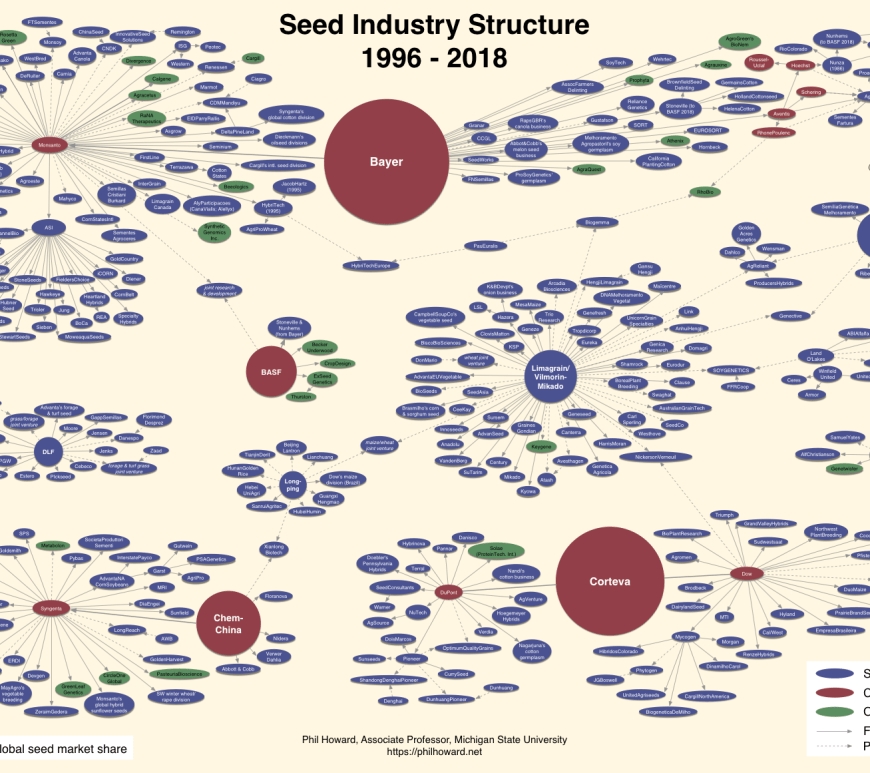
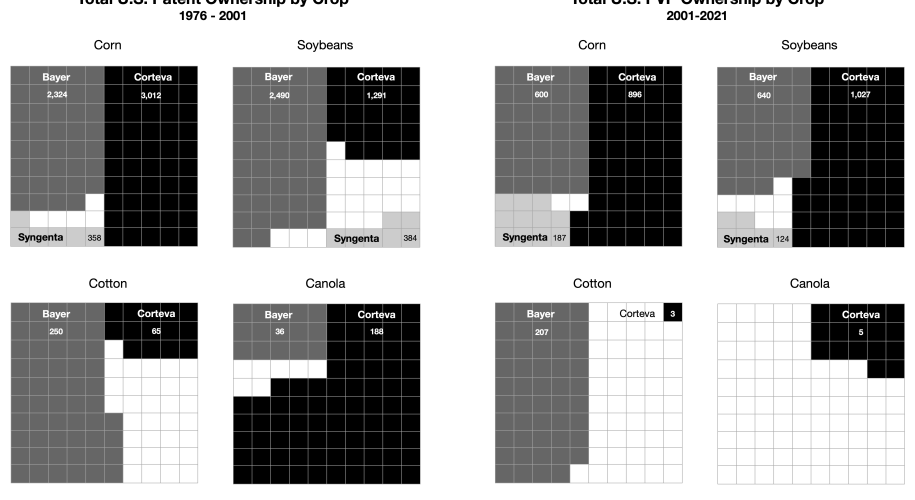
Global Seed Industry Changes Since 2013
Recent years have seen the “Big 6” agrochemical/seed firms combine into a Big 4. These four firms are now estimated to control over 60% of global proprietary seed sales. Continue reading Global Seed Industry Changes Since 2013

Craftwashing in the U.S. Beer Industry
Summary: Big brewers, which have experienced declining sales for their beer brands in the last decade, have been accused of “craftwashing” by some craft brewers and their aficionados—they define craftwashing as big brewers (>6 million barrels per year) taking advantage of the increasing sales of craft beer by emulating these products or by acquiring craft breweries, while also obscuring their ownership from consumers. To estimate … Continue reading Craftwashing in the U.S. Beer Industry
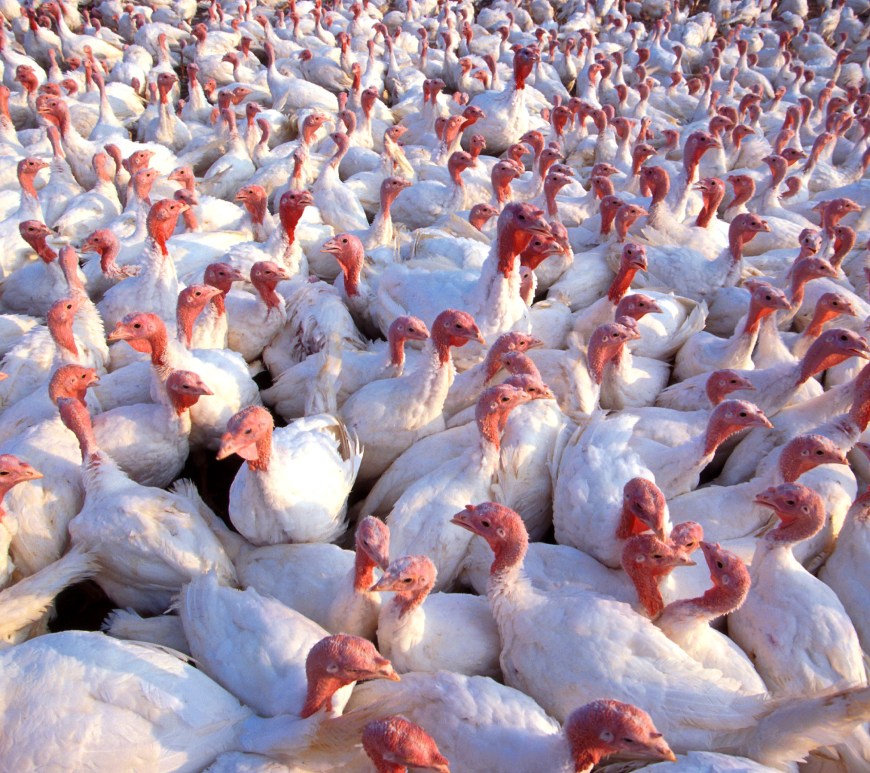
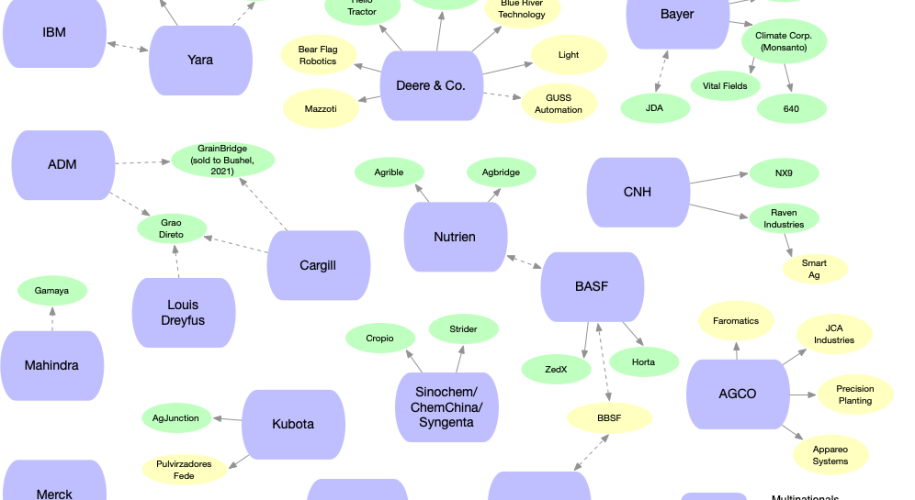
Power, Food and Agriculture
One of the most pressing concerns about the industrialization of agriculture and food is the consolidation and concentration of markets for agricultural inputs, agricultural commodities food processing and groceries. In essence a small minority of actors globally exercise great control over food system decisions. This means that because of increased consolidation of these markets globally – from the United States to China to Brazil, from South Africa to the United Kingdom – the vast majority of farmers, consumers and communities are left out of key decisions about how we farm and what we eat. Continue reading Power, Food and Agriculture

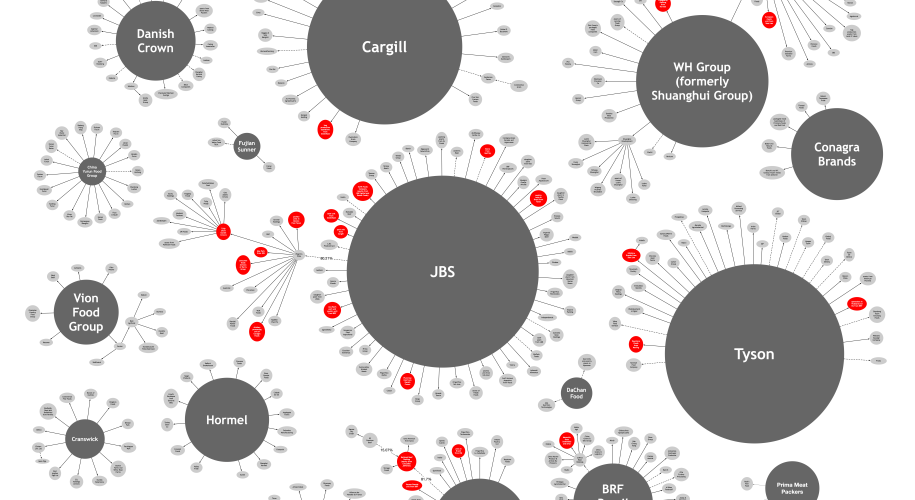
Consolidation in Global Meat Processing
The three largest meat processors globally have dramatically increased in size in recent years. Government subsidies have played a critical role in increasing their power. Continue reading Consolidation in Global Meat Processing
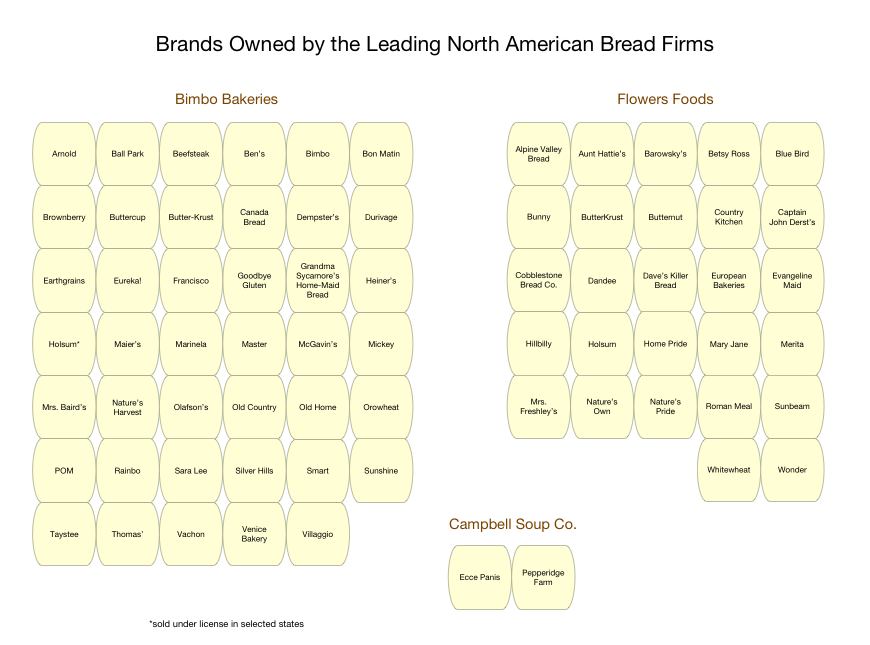
Decoding Diversity in the Food System: Wheat and Bread in North America
Diversity is important for the resilience of food systems, as well as for its own sake. Just how diverse are the systems that produce our food? I explore this question with a focus on wheat and bread and North America, and even more specifically in baking, milling and farming. Although the opacity of food and agricultural systems makes definitive answers difficult, these segments appear to be increasingly uniform with respect to ownership, geography, varieties and genes. There are also important countertrends, and while efforts to resist uniformity are currently small, they are making some progress in maintaining or even increasing diversity in some areas. Continue reading Decoding Diversity in the Food System: Wheat and Bread in North America
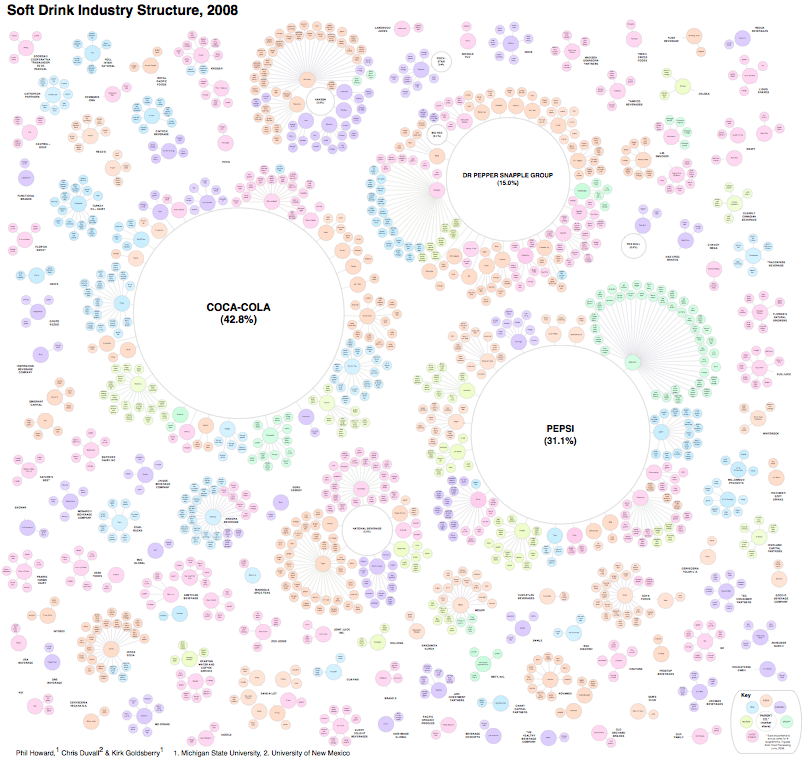
The illusion of diversity: visualizing ownership in the soft drink industry
Three firms control 89% of US soft drink sales. This dominance is obscured from us by the appearance of numerous choices on retailer shelves. Steve Hannaford refers to this as “pseudovariety,” or the illusion of diversity, concealing a lack of real choice. To visualize the extent of pseudovariety in this industry we developed a cluster diagram to represent the number of soft drink brands and varieties found in the refrigerator cases of 94 Michigan retailers, along with their ownership and/or licensing connections. Continue reading The illusion of diversity: visualizing ownership in the soft drink industry
 Philip H. Howard